Keywords:
sovereignty, international law, christian culture, constitutionalism, state continuity, national identity, national heritage, christianity, independence, church-state relations
Published:April 28, 2026
symbolicznej.
23:02
This article examines the role played by the constitutional act of April 23, 1935, known as the April Constitution, in ensuring the continuity of the Polish state in exile. Its provisions made it possible to preserve the continuity of statehood and the sovereignty of the Republic of Poland, which had been under double wartime occupation since September 1939. Following the seizure of power in Poland by the Communists — who in effect constituted an outpost of a foreign state — the Polish government in exile continued its activities after 1945. Standing firm on the principle of legalism, it based its authority on the April Constitution. Although it was not recognized on the international stage, it made possible the preservation of legal continuity between the Second and Third Polish Republics, at least in the symbolic sphere.
Mirosław Szumiło, Maria Curie-Skłodowska University; Institute of National Remembrance
Profesor doktor habilitowany nauk humanistycznych, historyk. Główny specjalista w Instytucie Pamięci Narodowej. Profesor w Katedrze Historii Społecznej i Edukacji w Instytucie Historii Uniwersytetu Marii Curie-Skłodowskiej w Lublinie. Jego zainteresowania naukowe koncentrują się wokół systemu rządów komunistycznych i elit komunistycznych w Polsce. Autor kilkudziesięciu publikacji na ten temat, w tym monografii: Roman Zambrowski 1909–1977. Studium z dziejów elity komunistycznej w Polsce, IPN, Warszawa 2014; Gierek. Droga do władzy, UMCS, Lublin 2023.
Copyright (c) 2026 Ordo Iuris Institute for Legal Culture - Scientific Press
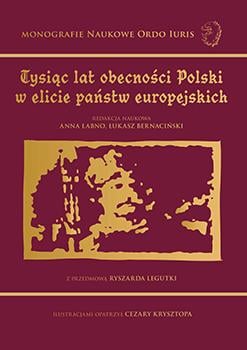
Szumiło, M. (2026) “The april constitution and the continuity of the Polish state in exile”, in A thousand years of Poland’s presence among the elite of European states. Warszawa: Ordo Iuris Institute for Legal Culture - Scientific Press (Ordo Iuris Library). doi:10.37873/6s1qd487.