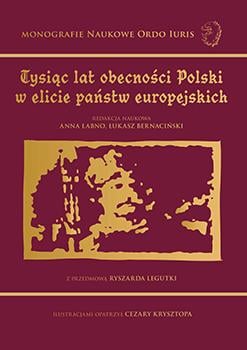
Professor Gertruda Uścińska, representing the university serving as the conference's honorary patron, references the coronation of Bolesław the Brave as the "founding act" of Poland's presence in Europe, and draws a line of continuity between that historical moment and the contemporary role of the Constitutional Tribunal as the guardian of sovereignty.
As Rector of the Nicolaus Copernicus University in Warsaw, she identifies the challenges facing modern Poland — demographic, digital, migratory, and geopolitical — and emphasizes that modernity need not conflict with national identity. She places particular weight on the role of science and education as a strategic instrument for strengthening statehood, and on the need to cultivate informed and competent citizens, as well as political and administrative elites. She regards the social security of citizens as a prerequisite for the survival of the political community.
The address concludes with a call to build Poland's strength and power on the foundations of wisdom, knowledge, competence, patriotism, and service to the common good. The speaker invokes the motto of Nicolaus Copernicus — Docti sicut in firmamento stellae fulgent ("The learned shine like stars in the firmament") — as an inspiration for the continued development of the state and the nation.
Profesor doktor habilitowana, prawnik, nauczyciel akademicki z kilkudziesięcioletnim doświadczeniem, wykładała na Uniwersytecie Warszawskim oraz innych uczelniach w kraju i za granicą. Rektor Szkoły Głównej Mikołaja Kopernika. Kierownik Centrum Studiów nad Zabezpieczeniem Społecznym na Uniwersytecie Warszawskim. Ekspert i badacz w zakresie prawa międzynarodowego, zabezpieczenia społecznego, rynku pracy, bezpieczeństwa socjalnego i swobody przepływu osób w Unii Europejskiej. Autorka licznych publikacji z zakresu prawa międzynarodowego, prawa Unii Europejskiej i porównawczej polityki społecznej.

This work is licensed under a Creative Commons Attribution-ShareAlike 4.0 International License.