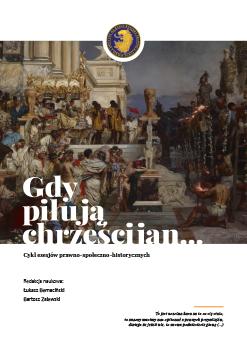
Keywords:
persecution of Christians, Catholic Church, religious law, religious freedom, Church history, anticlericalism, revolutionary legislation, religious discrimination, state–Church relations, protection of believers' rights
Published:July 13, 2023
The chapter outlines the existing tax regulations applicable to churches and clergy, emphasizing that they are generally subject to standard tax laws, with certain exemptions related to non-economic and statutory activities. The author stresses that similar exemptions apply to other social organizations, which means that churches are not uniquely privileged in the tax system. The taxation of clergy operates under a lump-sum system that has been in place for many years.
The text then presents political proposals aimed at increasing the taxation of churches, noting that they are often general in nature and fail to reflect the actual legal framework. These proposals include abolishing tax exemptions, introducing detailed income reporting requirements, and treating religious activity as commercial activity. The author argues that such proposals are frequently based on misunderstandings and oversimplifications.
In the final part, the author analyzes the potential consequences of implementing these changes, highlighting that they could lead to deep state interference in the internal affairs of churches and their relationships with believers. Taxation of religious activity could require artificially determining the value of spiritual services and might restrict access to religious practices. The conclusion asserts that the proposed reforms could violate constitutional principles such as freedom of religion, equality, and the autonomy of religious institutions.
Tomasz Woźniak, Maria Curie-Skłodowska University
Doktor nauk prawnych. Absolwent studiów prawniczych na Wydziale Prawa i Administracji Uniwersytetu Marii Curie-Skłodowskiej. Pracownik naukowo-dydaktyczny w Katedrze Prawa Finansowego UMCS. Ekspert Instytutu na rzecz Kultury Prawnej Ordo Iuris. Autor publikacji z zakresu prawa podatkowego oraz dostępu do informacji publicznej. Specjalizacja naukowa rozwijana w obszarze międzynarodowego prawa podatkowego, postępowania podatkowego oraz historii prawa.
Copyright (c) 2023 Ordo Iuris Institute for Legal Culture - Scientific Press